The Difference Between Porcelain and Quartz Worktops Explained

Porcelain and quartz sit at opposite ends of the modern surface story: one is a high-tech ceramic baked at extreme temperatures to achieve near-indestructible properties, while the other is an engineered composite designed to offer flawless consistency and luxury.
Both are among the most requested materials for high-end kitchens and bathrooms, and both carry a genuine sense of modern luxury. So what actually separates porcelain from quartz? Is porcelain really the ultimate heatproof surface, or does quartz still hold the crown for everyday durability? Here is the honest breakdown to help you decide which is right for your home.
Sintered Tech Vs Engineered Stone
The fundamental difference between porcelain and quartz is how each material is made. Porcelain worktops (often referred to as sintered stone or ultra-compact surfaces) are crafted from natural raw materials like clay, feldspar, and silica. These minerals are blended, subjected to immense pressure, and then baked in a kiln at temperatures exceeding 1200°C. This firing process mimics the natural formation of stone over millennia but compresses it into just a few hours, resulting in an incredibly dense, lightweight, and glass-like slab.
Quartz worktops, by contrast, are engineered using a different method. Manufacturers take crushed natural quartz crystals, one of the hardest minerals on the planet and blend them with polymer resins and colour pigments, typically resulting in a slab that is around 90-95% natural quartz. Because quartz relies on resins to bind the crystals together rather than extreme heat fusion, it behaves differently under everyday kitchen conditions.
That last point is worth pausing on. While both are manufactured to offer exceptional pattern consistency and can convincingly mimic natural marble veining, their core ingredients mean they handle heat, impact, and cutting in completely different ways.
Porcelain and Quartz Comparison
Key differences between porcelain and quartz include:
| Feature | Porcelain | Quartz |
|---|---|---|
| Composition | 100% natural minerals (fired ceramic) | 90-95% quartz crystals bound with resin |
| Sealing | Never needs sealing | Never needs sealing |
| Heat Resistant | Excellent; entirely unaffected by hot pans or flames | Good, though quartz resin can scorch under high heat |
| Stain Resistant | Completely non-porous and impervious to stains | Non-porous and highly stain resistant |
| UV / Outdoor Use | Fully UV-stable; will not fade outdoors | Not recommended; UV exposure degrades the resin over time |
| Scratch Resistant | Virtually unscratchable by everyday kitchen knives | Very good, one of the hardest materials available |
| Impact / Chipping | More brittle; sharp impacts on edges can cause chipping | Highly impact-resistant; absorbs knocks exceptionally well |
| Thickness Options | Typically ultra-thin (6mm-12mm) for sleek modern profiles | Typically thicker (20mm-30mm) for a substantial look |
| Lifespan | Decades, with zero structural degradation | Decades, with minimal maintenance |
Appearance and Design Flexibility
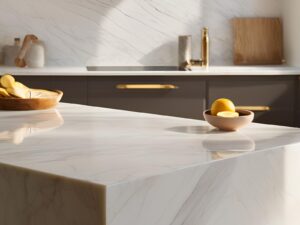
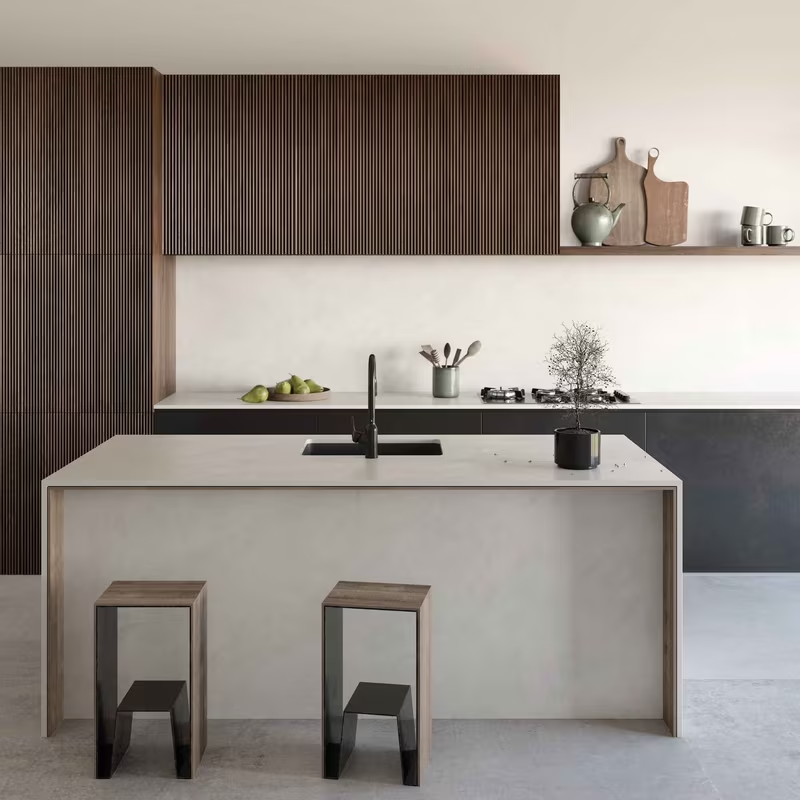
This is where your personal aesthetic style will play a major role. Because porcelain designs are printed onto the surface before firing, manufacturers can replicate industrial concrete, rusted iron, wood grains, and rare marbles with astonishing high-definition detail. Furthermore, because porcelain is incredibly dense, it can be manufactured in ultra-thin profiles (often just 12mm thick). This makes it the darling of modern, minimalist architecture, allowing for sleek worktops, seamless wall cladding, and integrated cabinet fronts.
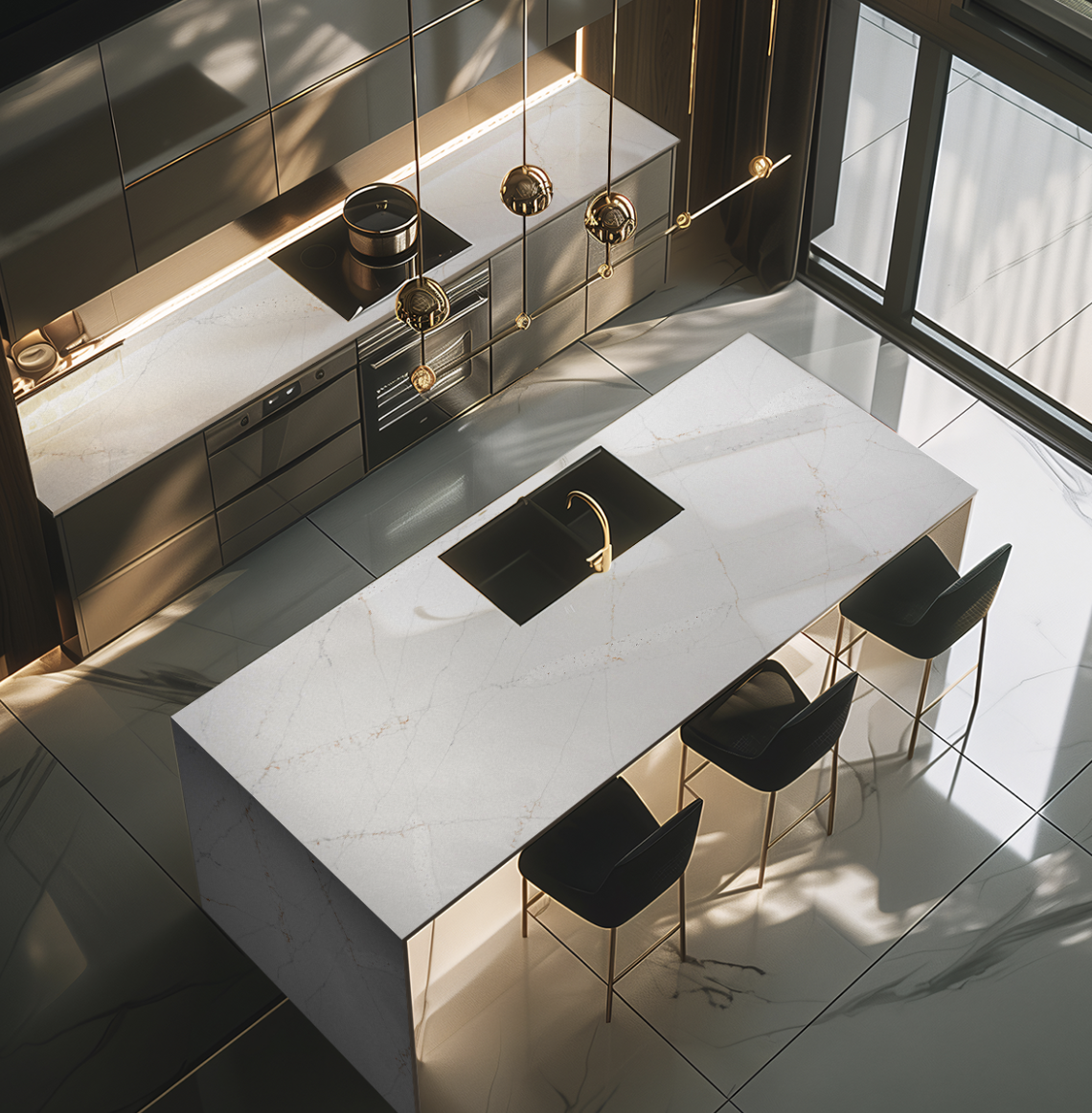
Quartz offers a more classic, solid presence. It is typically supplied in 20mm or 30mm thicknesses, giving a kitchen island a heavy, premium feel. The patterns and veining in quartz run all the way through the thickness of the slab. With porcelain, the pattern is primarily on the surface layer, meaning that if you choose a complex marble-effect design, the pattern won’t continue through the edge profile unless a mitred edge is fabricated.
Maintenance and Everyday Practicality
When it comes to daily cleaning, both materials are incredibly forgiving. Because neither stone is porous, they both reject bacteria, never require sealing, and won’t etch when exposed to harsh acids like lemon juice, red wine, or vinegar.
However, porcelain takes the lead when it comes to raw environmental resilience. It is entirely UV-stable, meaning its colours will never fade or turn yellow under direct sunlight, making it the ideal choice for outdoor BBQs and garden kitchens where quartz cannot go.
Durability and Heat Resistance
This is the area where the two materials diverge most sharply, and it is usually the deciding factor for most households.
Porcelain is virtually impervious to heat. Because it was born in a 1200°C kiln, you can take a scorching pan directly off the hob and place it straight onto the worktop without a trivet, it will not scorch, crack, or discolour. It is also so hard that you can chop ingredients directly on the surface without a cutting board (though it will dull your knives).
The trade-off is that porcelain is more brittle; if you accidentally drop a heavy cast-iron pan against a exposed edge or corner, it is more prone to chipping than quartz.
Quartz cannot handle the same extreme heat. The resins inside the slab can suffer from thermal shock or permanent scorch marks if a hot pan is placed directly on it. A trivet is a strict necessity with quartz. However, that same resin blend makes quartz much more flexible and impact-resistant. It easily absorbs the minor knocks and bumps of a busy family kitchen without chipping or cracking.
Cost Considerations
Pricing for premium quartz and high-end porcelain is often quite comparable at a material level. However, porcelain requires specialised diamond-tipped tools and expert handling to cut and fabricate correctly because it is so hard and brittle before installation. This means fabrication and installation labour costs for porcelain are generally higher than quartz, reflecting the precise skills required by the stonemason.
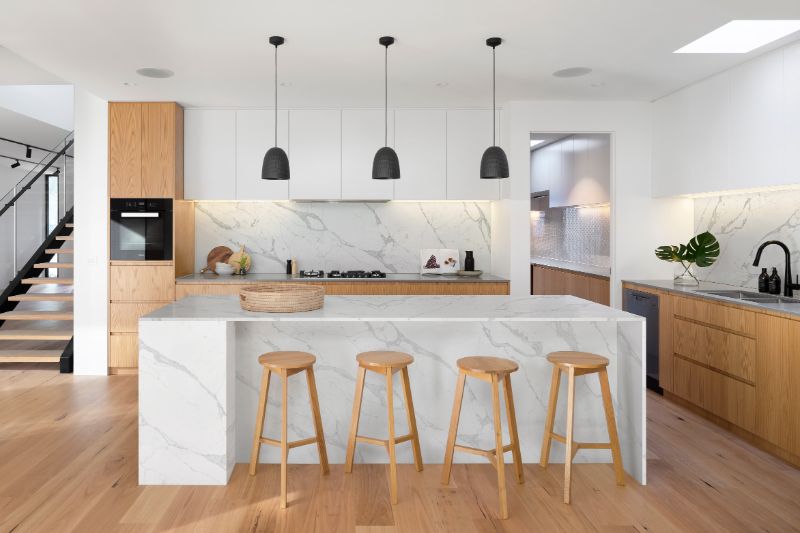
Choosing Porcelain or Quartz
There isn’t a single right answer here, only the right fit for your lifestyle and design goals.
If you are aiming for a ultra-sleek, modern aesthetic, want the absolute freedom to put hot pans straight onto the surface, or are planning an outdoor cooking space, porcelain is the ultimate high-performance material.
If you want a classic, substantial worktop profile that offers excellent all-around durability, handles the heavy knocks of a bustling family kitchen with ease, and gives you thousands of design and colour options to choose from, quartz remains the modern standard for a reason.