How to Clean & Maintain Silestone Worktops

| Spill / Cleaning Task | Recommended Action | Approved Products | Items to Avoid |
|---|---|---|---|
| Daily Wipedown & Grease | Wipe with a soft cloth and warm water. For grease, use standard washing-up liquid to break down food oils. |
• Microfibre cloths • Washing-up liquid / Mild dish soap • pH-neutral multi-surface sprays |
• Steel wool or wire scourers • Abrasive scouring powders • High-pH solvents |
| Dried-on Food & Spills | Leave a wet cloth over the patch for a few minutes to soften, then rub gently with a non-scratch pad. |
• Non-scratch delicate scrubbing pads • Official Cosentino Q-Action spray |
• Sharp knives or metal scrapers • Heavy-duty abrasive sponges |
| Limescale Build-up | Apply a mild natural acid or specialist quartz remover. Rinse thoroughly with clean water afterward. |
• Diluted white vinegar • Viakal (do not leave to sit for long periods) |
• Industrial descalers • Concentrated bleach |
| Stains (Wine, Coffee, Ink) | Act quickly. Wipe immediately before the liquid can dry, even though Silestone is non-porous. |
• Warm soapy water • Diluted isopropyl rubbing alcohol (for stubborn ink) |
• Permanent markers left untreated • Nail polish remover (Acetone) |
| Heat Protection | Always use a trivet or heat-protection mat. While quartz is heat-resistant, sudden thermal shock can damage the resin. |
• Silicone mats • Wooden or cork trivets • Stainless steel hot rods |
• Hot pans placed directly from the hob • Slow cookers left on bare stone |
Made of 90% Quartz, one of the toughest natural sheen materials, Silestone is easy to care for and difficult to damage. Despite knowing it’s literally tough as rock, many people are wary of using the wrong product on their new Silestone worktop. Below you’ll find what you need to know to keep your Silestone worktop in great shape for years – or decades – to come.
Regular cleaning of Silestone worktops
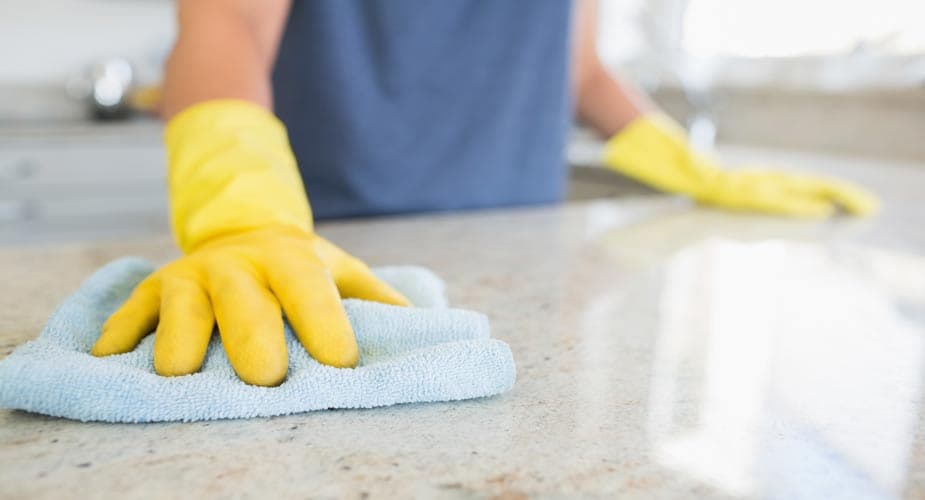
Silestone quartz worktops are easy to maintain with daily cleaning. For most day-to-day cleaning, all you have to do is wipe your counter down with a damp cloth. You can also use any pH balanced gentle household cleaner, such as dish soap or an all-purpose cleaner. Don’t use harsh or abrasive chemicals, such as bleach or oven cleaner, and make sure you avoid abrasive cleaning cloths and scourers, such as steel wool. These are likely to cause scratches or micro-pitting, causing dull patches on the worktop surface. This means that while your Silestone kitchen worktops will still be useable, it won’t be as attractive.
| What to Do | What to Avoid |
| Use a soft microfibre cloth dampened with warm water. | Avoid harsh chemicals like bleach, oven cleaner, or high-pH solvents. |
| Use mild, pH-balanced dish soaps or dedicated stone cleaners. | Never use steel wool, wire scourers, or abrasive scouring powders. |
| Wipe up spills (like wine, coffee, or oil) immediately. | Do not use decorative wax or topical polish shine-enhancers. |
Removing Limescale from Silestone
Many people are cautious about using limescale removers on Silestone as they know that these can damage natural stones such as marble and limestone. Silestone is made from tougher stuff, and natural limescale removers such as vinegar work a treat.
Other spills and marks
Silestone does not absorb liquid, so it’s very hard to stain the stone. However, if a spill has been missed and allowed to dry on, you may be wondering how to remove it. The short answer is with gentle cleaning products and a non-abrasive no-scratch scouring pad. However, if that won’t cut it, the official Silestone cleaning guide can be found on the Cosentino website and gives information on how to use more intensive cleaning solutions without damaging the stone.
Bringing back the shine
If your Silestone kitchen or bathroom worktop starts to look dull or matte rather than shiny and lustrous it’s easy to take action. The most common cause is a build-up of grease, wax or cleaning products. If you suspect that grease is the culprit, washing up liquid is an excellent choice to cut through food grease. Where a build-up of wax or other products used to clean the surface is suspected, it’s best to use a specialist spray that’s suitable for stone worktops. This will usually cut through the build-up and let the finished stone’s sheen shine through, making it look as good as new.
Repairing damage to Silestone worktops
Cosentino offers a 25 year warranty on their Silestone products, so your first port of call, if you see any damage, should be either the company who made and installed your worktop or Cosentino themselves. Silestone is incredibly tough and trying to repair the damage yourself can make the problem more obvious. Cracks are very rare, so if you spot one it’s essential to have the counter assessed to make sure that there aren’t any structural problems with the installation.